ABOUT Dental Implants
Nowadays dental implants are popular among people in different ages. Dental implants are made for those who have tooth decay, periodontal disease or injury. For a long time, the only treatment to replace missing teeth were dentures and bridges. Fortunately, medicine improves each decade and today dental implants are available.
What Are Dental Implants?
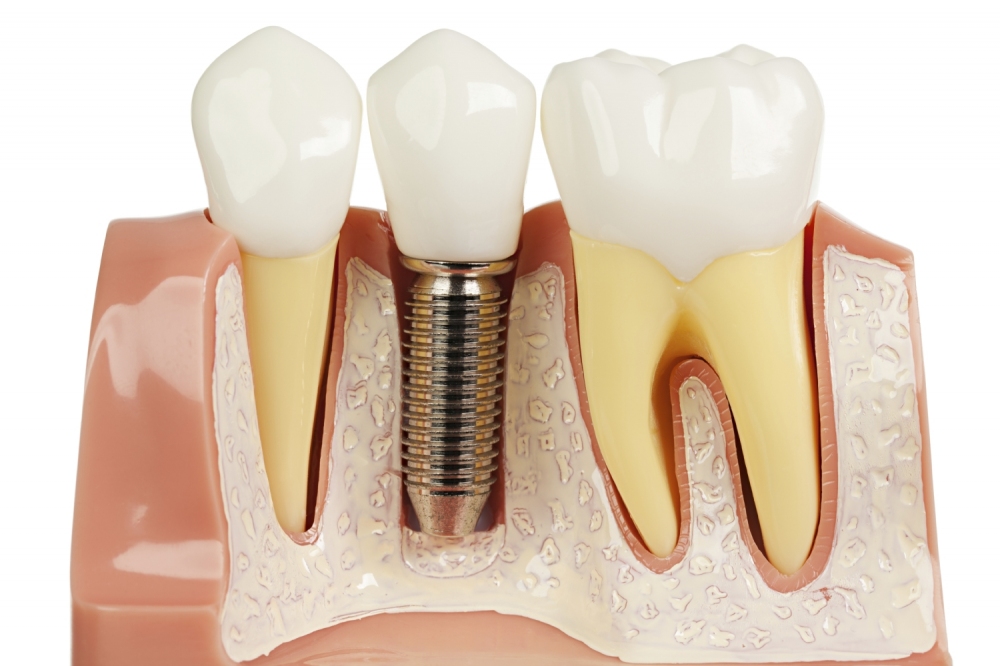
Dental implants are inserted into the tooth roots. Implants provide a strong foundation for permanent or removable replacement teeth that are tailor-made matching natural teeth.
Advantages of Dental Implants
Dental implants have following advantages:
• Improvement of appearance.Dental implants feel and look exactly same like real teeth. The result is permanent, as an implant is inserted inside the root.
• Speech improvement.Dental implants will not make a person feel uncomfortable while speaking and worrying that the implanted teeth will slip inside the mouth.
• Comfort.Implants are done one time in life and do not bring discomfort as removable dentures do.
• Food eating is easier.Unlike dentures, that sometimes make chewing difficult, implants are functioning same as real teeth. A person with implants can enjoy a food without any pain or unconfidence.
• Improved self-confidence. Dental implants make the smile better and more attractive, this is how the people feel more self-confident after inserting implants.
• Improved oral health.While inserting dental implants, a dentist do not reduce other teeth, as it happens while making tooth-supported bridge. Nearby teeth are not changed in shape and size while implanting, own teeth stay unharmed to improve long-term oral health.
• Duration. Implants are very long-lasting and will stay undamaged for many years. With good care, many implants last a lifetime.
• Convenience. Removable dentures are made for patient’s convenience. Dental implants erase the distressing inconvenience of removing dentures, as well as the need for messy adhesives to keep them in place.
Success Rates of Dental Implants
• Success rates of dental implants differ, depending on which area in the jaw the implants are inserted but, in general, dental implants have a success rate of up to 98%. With appropriatecare (read below), implants can last a lifetime.
Who Can Get Dental Implants?
Generally, everyone healthy enough to go through a routine dental extraction or oral surgery can be considered for a dental implant. Patients should have healthy gums and enough bone for holding an implant. Heavy smokers, people who are suffering from uncontrolled chronic disorders - such as diabetes or heart disease - or patients who have had radiation therapy to the head/neck area need to be evaluated on an individual basis.
What Is Involved in Getting a Dental Implant?
The first step in the dental implant process is the development of an individualized treatment plan. The plan meets patient’s specific requirements and is prepared by a dentist, who is specially experienced in oral surgery and restorative dentistry.
After that, the tooth root implant, which is a little post made of titanium, is placed into the bone socket of the missing tooth. As the jawbone heals, it grows around the implanted metal post, attaching it securely in the jaw. The healing process can take 6-12 weeks.
Once the implant has bonded to the jawbone, a small connector post (abutment) is attached to the post to securely hold the new tooth. To make the new tooth or teeth, a dentist makes impressions of your teeth, and creates a model of your bite (which captures all of your teeth, their type, and arrangement). The new tooth or teeth is based on this model. A replacement tooth, called a crown, is then attached to the abutment.
Instead of one or more individual crowns, some patients may have attachments placed on the implant that retain and support a removable denture.
Your dentist also will match the color of the new teeth to your natural teeth. Because the implant is secured within the jawbone, the replacement teeth look, feel, and function just like your own natural teeth.
How Do I Care for Dental Implants?
Dental implants require the same care as real teeth, including brushing, flossing, rinsing with an antibacterial mouthwash, and regular dental check-ups.